Linguistic relativism asserts that the specific language or languages you speak as a native influences and determines your cognition, perceptions, worldview and your categorisation of reality. Linguistic relativism is also known as the Sapir-Whorf hypothesis, named after Edward Sapir and Benjamin Lee Whorf, who never actually co-authored any works and never co-proposed a formal unified hypothesis. Research has materialised positive empirical evidence for a weaker version of linguistic relativity, proving therefore that people are intimately influenced by the particularities of native tongues without being bound. The word “determine” is thus perhaps inaccurate, depending on how strongly it is applied.
here is an opposing theory to linguistic relativism, the flip side, called linguistic universalism. Beyond this theory, a linguistic universal can be understood as a pattern that occurs across all languages. For example, all languages have nouns and verbs, and when spoken, consonants and vowels. The field of linguistic universals has been pioneered by two main figures: Noam Chomsky and Joseph Greenberg. Chomsky’s famous theory of universal grammar proposes that the language faculty has innate biological characteristics that allow for a degree of standardisation across the world’s languages. The most basic concept in UG is that there are innate constraints on what the grammar of a possible human language can be, from within the human language faculty. Greenberg, meanwhile, worked on identifying existing universals, successfully compiling a list of 45 basic universals covering some thirty languages. Again, it is important to understand that humans are not bound by linguistic universals, and not completely bound by relativism either. The world’s languages have been formed going by not just the only biological options for successful communication, tightly disciplined by the innate constraints in what the grammar of a possible human language can be, but instead by an intoxicating combination of vision and coordination. Languages don’t strictly have to be a certain way, universally, but are still coordinated according to what suits biological functionality and cultural vision.
Of the two, linguistic relativism has been more helpful for The Buzz-Concept Project. Indeed, linguistic universals are not strictly as essentially necessary for effective cognition as some people previously thought. They are things everyone has accepted to some extent because they are what is convenient and flattering, for the universality of human culture rather than language itself, and not because we absolutely have to, strictly speaking. For example, we have nouns because we have heartbeats, but we are not cerebrally bound by nouns, are we? It’s just what is most complementary. Existing linguistic universals are ironically most interesting to me because of how they in turn enhance differences, not universality, in the way people think according to the language they speak.
Russia’s attempts to invade Ukraine and Europe are reflective of Vladimir Putin’s capacity to reshape conflict in an unwelcome way, bizarrely, in the age of overly aggressive warmongering ideology being categorically invalid.
Human development throughout hominid history has roughly functioned on the basis of doubling up. When the human psyche of a given pioneering group has found an apt angle of doubling over predecessors or foreigners, major change happens. This process of doubling up can be blazingly obvious, such as if a group becomes so much better at something than others, or very frequently something more subtle and abstract, like if a Buzz-Concept casts an interesting, haunting parallel with something else.
Putin’s warmongering capacity started off as more abstract desire within his vision for harbouring power. He would have liked to… But now this instance of conditional tense is becoming worrisomely more mainstream. The aforementioned pattern of doubling up -of course- has been applied here, and over time the prospect of WW3 has become more concrete, as doubling up matches have acquired momentum.
Another critical case of doubling up: it has emerged that it might be the primary interest of the United States going forward to do business with Russia. It is sad that it has taken so long, so many decades after the Cold War commenced, for the United States, quite possibly world history’s most critical pioneer, to realise that it actually has a lot to learn and reap from Russia. This has amounted over time to a colossal failing. The US is understandably keen to address the discrepancies created by such failure. It is vexing that Putin has added such high extra costs for NATO.
I remarked previously, not long after Russia first launched its full-scale invasion of Ukraine back in 2022, that Russia’s stance was casting eerie parallels.
Some previous factors:
• The Great Disagreement(s) of primitive Caucasians described in previous posts. Southern Russia extends across the North Caucasus, with Ukraine nearby. Quite possibly memory of the Caucasus Hunter-Gatherers, the Proto-Nostratics and Indo-Europeans persists more strongly through Russia and Ukraine. Chewing.
• The First War, not the First World War but the first war that ever happened. I have a theory that mass cruelty and undue harshness were something that was incorporated into human culture at some point many thousands of years ago, and is certainly not instinctual to Homo sapiens. We are not naturally malevolent predators. So we can conjecture imaginatively some abstract things about the first war that ever happened, that there was imbalance that vexed people, for example.
• Prehistoric/ancient Yamnaya migrations from the Pontic-Caspian steppe to Europe. A pivotal tale of ambition/aspiration and quite possibly intense thirst for blood. This legacy persists throughout European DNA, after all.
• Russian imperialism. Their expansionism has not been resolved properly. What do they stand for if hegemony hasn’t worked for them?
• The World Wars 1 & 2, of course. Many questions about these events have not been satisfactorily answered.
• The Cold War, which was in a way in ultimate manifestation following the age of European empires and World Wars 1 & 2. Did the previous world wars satisfactorily finish off said age of empires? The ongoing importance of education about the 20th century’s Cold War between the United States and the Soviet Union / Russia is spectacular.
• Putin’s desire to redefine conflict in a way that is more reflective of his vision. What a sicko.
• In some people’s view -subversively- accounting for the rise of the English language as a global lingua franca on many counts. A way to make and distort the English news and then some.
What other factors have you identified? What parallels can you see?
Another piece of insight I have to share, some time for reflection after I first wrote this post (correction: these posts – originally there was more than one), is that the relativity between personality disorders and Buzz-Concepts is additionally a factor that keeps all human cultures continually related or connected. No, so far in my ideation, not all human languages are ultimately related, but all human cultures are.
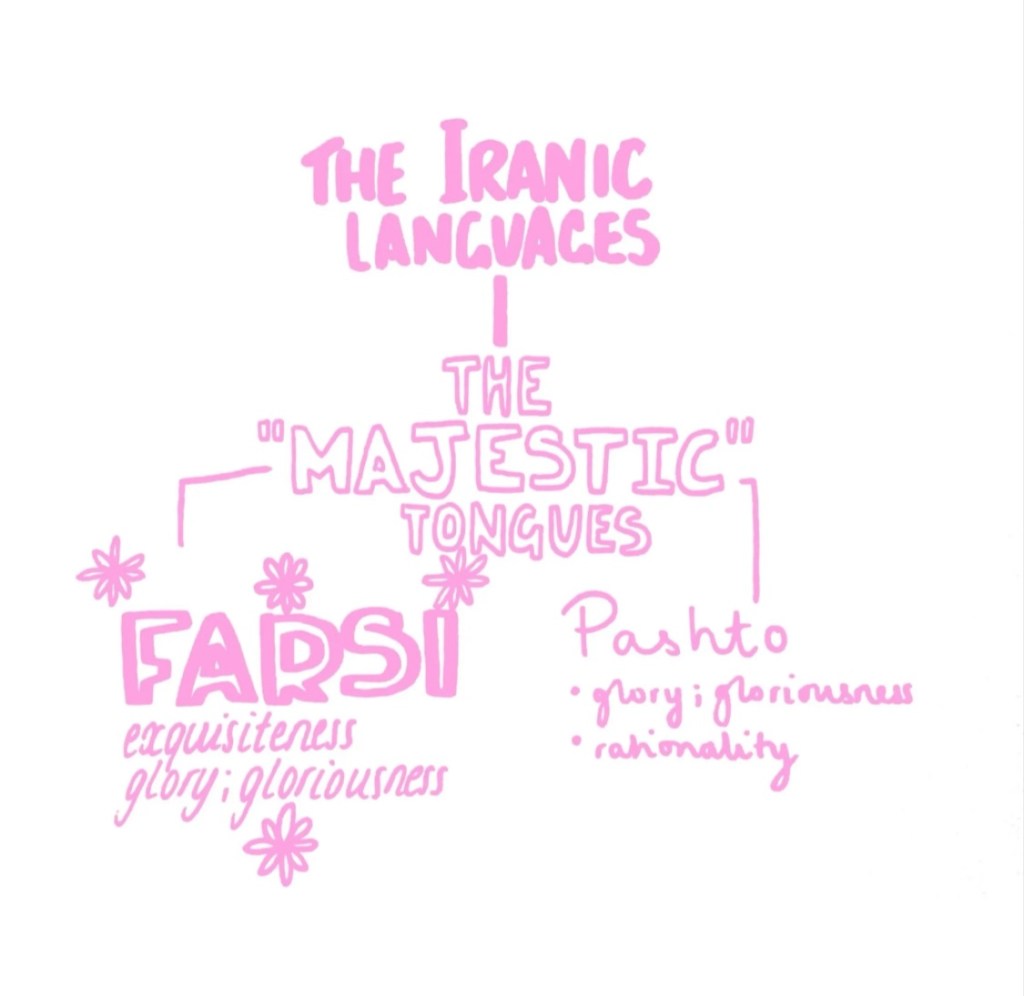
Iran is a noteworthy Indo-European-speaking nation, with – million Farsi or Persian speakers. The Indo-European language family is spoken by almost half of the world’s population – est, 3.4 billion. Farsi belongs to the Indo-Iranian branch of Indo-European. Farsi/Persian is the official language of Iran, and the first language of about 50 percent of the population. Of the rest of the Middle Eastern country’s population, 25 percent speak related Western Iranian languages and 25 percent speak Arabic, New Aramaic, Armenian, Georgian, Romany, and Turkic languages. Farsi is also spoken widely in the form of Dari in Afghanistan, alongside another Iranic language Pashto, and Tajik in Tajikistan.
Farsi/Persian has the Buzz-Concepts 1) exquisiteness and 2) glory, gloriousness. The primary Buzz-Concept of Farsi was originally glory, gloriousness as in other Iranic languages but this was displaced as Iran became Islamised. Likewise, Arabic once had the primary Buzz-Concept of unity, and Turkish, tact, but these also became displaced by an overarching Islamic Buzz-Concept exquisiteness (as Buzz-Concept) — in Arabic: رَوْعة / روعه / rawa, rawea, ruea, roua, roa, rawʕa, raw’a, raw3a / “exquisiteness” “splendour” “instance of amazement; instance of fright” “fear” “panic” “horror” “outrageousness” “beauty” “glamour” “excellence” “goodness” “stylishness” “agreeableness” “grace” “pleasantness” “prettiness” “alarm” “angst” “awe” “charm” “fright” “dread” “fineness” “glamour” “gorgeousness” “surprise” “terror” “trepidation” “fascination” “grandeur” Exquisiteness; Extraordinariness; Extravaganzas; fabulosity; Fabulousness; Heavenliness; Pageantries! Or something related to this word.
The position of Iran as Indo-European-speaking in the 21st century (another Islamic great, Turkey, has Anatolian IE heritage, though this branch is now entirely extinct) is interesting in that it is also a great Islamic power, where Christianity predominates in Europe and polytheistic Hinduism reigns in India.
Eight centuries ago, Iran birthed the deep wisdom of Rumi’s poetry, which pioneered with its deep sense of love and carved out a pivotal grasp of self-awareness for the entire world, in retrospect. Iran’s famous 13th-century poet was also an Islamic Hanafi jurist, theologian, and Sufi mystic. It seems strange to see Rumi’s homeland default nowadays so dramatically on such critical matters as American and Western relations. Iranian Islamists don’t understand that the Western and American grasp of glory is very legitimate -though sometimes mishandled- and they betray the legacy of Rumi, while still holding him as a central figure, by wanting selfish glory, without the deeper validity of intellectual consent.
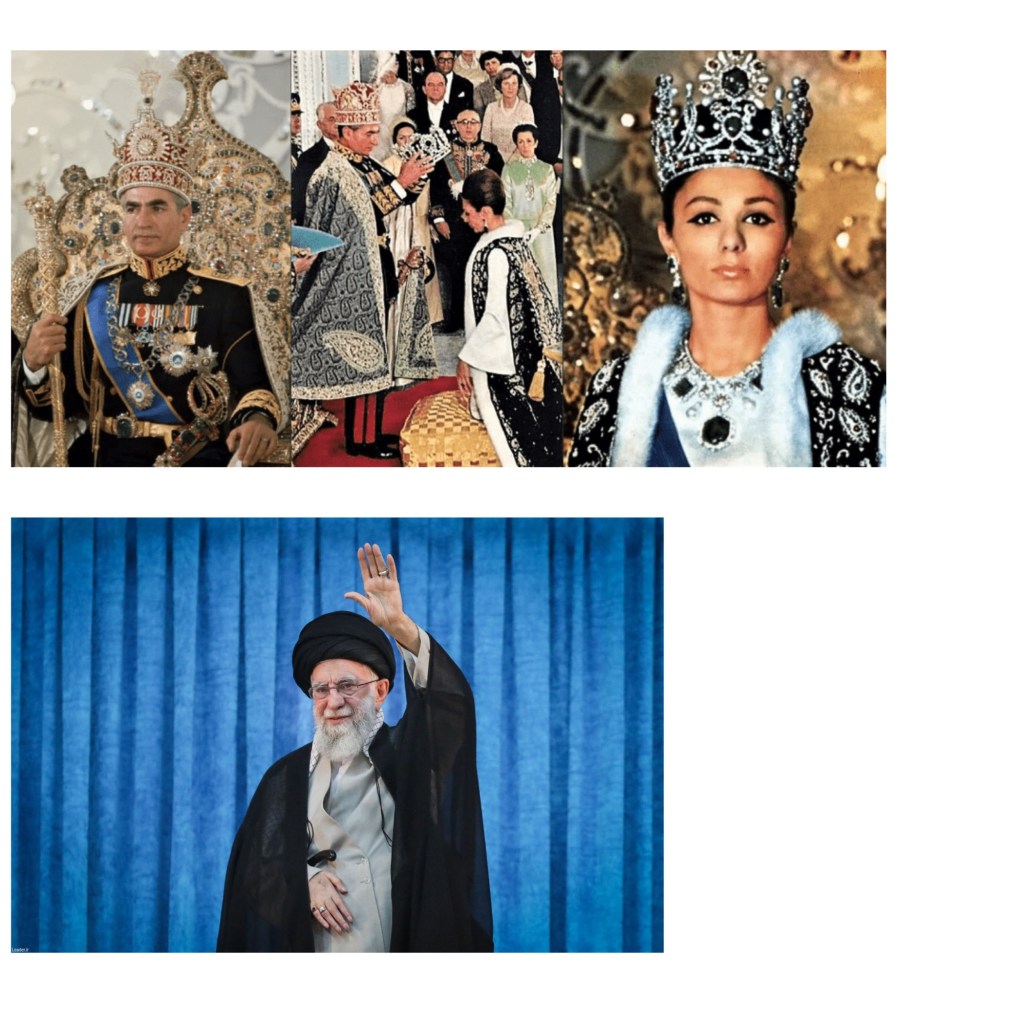
Yes, Iran has garnered intense notoriety for its opposition of the United States of America and the West since its 1978-79 revolution and the abolition of the Pahlavi monarchy. “For the Iranian revolutionaries, the US was, and still is, the Great Satan.” – Jim Muir, BBC News, 2015. Many Iranians have a different vision for the world, Americanised and Westernised as it seems to have evolved. Some even think that people’s obsession with the West is unjustified, and more attention should be directed towards Persia and Islam instead.
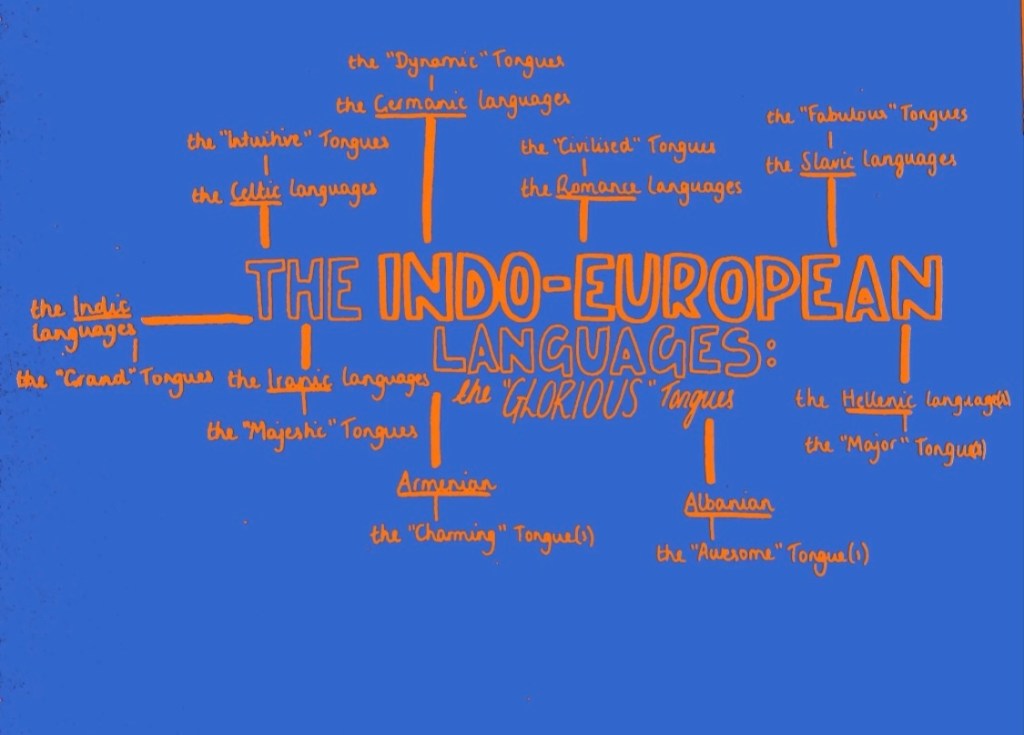
I have suggested viewing the Indo-European languages as the “Glorious” Tongues, as all Indo-European peoples seem to have this obsessive appetite in common. Although spoken in primitive times, Proto-Indo-European probably buzzed originally about (primitive) progression and upgraded to (primitive) glorification as traction accumulated. Indeed, since prehistoric Neolithic Proto-Indo-European times in the Caucasus and the Pontic-Caspian Steppe, different Indo-European-speaking peoples have developed their own understandings and visions of glorification.
Ultimately, the Iranian version of Indo-European-ity was seized, detained, captured by Islamist revolutionaries. The hold it hostage, aligning themselves instead as Shia Muslim first, and plunder it for skewed ends. Persian Islamists think they are purging themselves of indignity, but they are so very wrong to interpret Indo-European-ity in this way. Why? Because it distorts the patrimony for the rest of us, which proffering this disturbing façade of hypocrisy, especially in Europe, where Indo-European DNA is actually more prominent.
Maybe some people don’t see the prominence of the bond between Farsi and English without the technical linguistic knowledge of inherited word forms. The Iranian monarchy, which was nevertheless far from perfect, was honestly so much better at managing Indo-European-ity, and that was accordingly something the United States was eager to recognise.
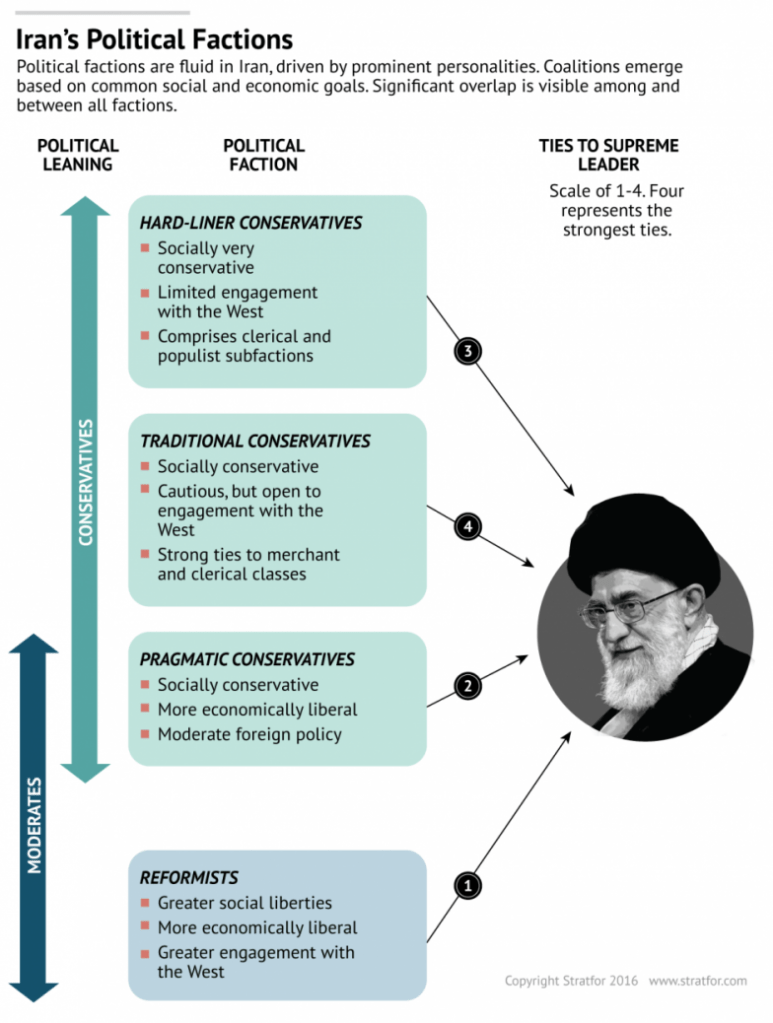
The Pahlavi dynasty versus today’s leader Ali Khamenei
The Proto-Indo-Europeans were not necessarily so boldly all about primitive glorification, but of course they were proud of their language and its structures and knew it had phenomenal potential beyond them. What were they about then? They certainly had a vision, and it was interesting. To elucidate, my theory is that the Proto-Indo-Europeans called themselves something related to the “Veneti”, “Venetians”, “Venetes”, *vanat-, *wenet(o)-… Most likely from an Indo-European root with the sense of “love”, “wish”, “strive”, “desire” (the name of the Roman goddess “Venus” is a cognate), “kinship”, also “wind” (cognate alert!), and/or another root meaning “plait”, “braided ones”, “wrap, enclose, cover”. See more here. Their cultural vision reflected their name, which even had structural connotations. The Indo-European-speaking Yamnaya came to bury people in their famous kurgans, reflecting brains being inside heads and/or braids on heads, perhaps. The Indo-European dynamic could be a magnificent sun-dome model, and what one does within the sun-dome, and/or flexing between this and intimate braiding. These structural connotations live on, for example in Iranian politics. And are of course woefully misinterpreted by Iranian Islamists.
Please read my previous post entitled “Propositions!” to understand this one.
“Trumpophonism”, collectively speaking of what may well have been a subgroup of Nostratic languages, consisted of strong language use (“Super-Tongue”?). Speakers probably displayed enhanced inner experience. This was what seemingly came before Indo-European.
My predictions for the Buzz-Concepts of “Trumpophonism” are:
Primitive primacy, technically but also vaguely speaking (by today’s standards) (primitive-primacy-technically-speaking)
Yet there may have been another “Trumping-style” language or dialect, previously, immediately prior to the establishment of the Nostratic language family 10-20,000 years ago. But this was not conscious “trumping”, more of a broad visual effect/vibe/charm/potency that speakers sort of had that they didn’t so consciously cultivate. It was a key factor in the background of the early development of the Nostratic languages.
This may have been the real Proto-Nostratic, the very first of this line, but not the specific language from which modern Nostratic languages technically descend. Or it was a pre-eminent manifestation of pre-Nostratic Proto-Global(iesque) language.
Prior to the Nostratic languages, the region was still Proto-Global-speaking (Proto-Globaliesque), with people speaking languages that were still sort of related to Proto-Global, however much similarity had actually been retained after probably 100,000+ years. Moreover, my findings indicate that prior to the Nostratic languages, the generic Proto-Global Buzz-Concept in the area – among these Caucasians in Europe and West Asia perhaps – was intuition. This was the Buzz-Concept used by the immediate Proto-Global(iesque) predecessors to Proto-Nostratic culture – used immediately prior to the Nostratic lift-off. The Proto-Nostratic I have been dealing with previously was the Language of Prehistoric Scope or the Language of Scoping Out And Swerving Around Primitive Enterprise.
As far as primitive Caucasians (people actually living around the Caucasus not the entire Caucasoid race) of the time were concerned, there were three heartwarming directions: North, South, and West to Europe. The East / oriental direction to Asia was mocked for some sort of perceived laxity at the time. Reflecting vaguely the swastika four-arm model, this joke was passed on by generations of Caucasians.
My theory is that somewhere from Europe to the Caucasus, a psychological milestone had been reached – that forced Asians further East to reveal themselves via discrepancy according to what the human race had been reduced to over the past 20-50,000 years by Asian cultural norm. This developed from two critical things: the population of Asia by genetic Proto-Eurasian (who later diverged into Western Eurasians i.e. Caucasoids and Eastern Eurasians including today’s Mongoloids and Australoids; they were the progenitors of all ethnicities today except Bantoid and Khoisan Africans) Homo sapiens upon emigrating from Africa, and the advent of “new language” that is not related to Proto-Global by Basal East Asians around the Yangtze River in what is now China. In Asia proper, and probably not in the European fringes, a cultural concept of “foul to the sky” had developed. The Caucasians eventually clocked this and therein subtly mocked “deep Asians”.
The reality of northerners looking more to the North, and to whatever other ethnicities dwell there, and southerners looking the South, and likewise with Easterners and Westerners, was important to primitive Caucasians. Zhuzhing on the outsiders we live closest to and relating that back to landmarks and the position of the sun. Long before the disagreement described in my previous post.
Proto-Nostratic was potentially originally a product of Caucasus Hunter-Gatherers (CHGs) or their predecessors in the Caucasus. Would these predecessors have been genetically Basal West Eurasian -Dzudzuana? Of course it’s hard to say. Related to the CHGs were Anatolian Hunter-Gatherers (oldest specimen 15,000 kya), who would later give rise to the Early European Farmers, a large primitive lineage who migrated across Europe. Before the CHGs met the MegaQuirkies/Alarodians (see previous post) and became acquainted with “the original prestiged h*rniness”, there was the Anatolian fussiness. To the south, the Upper Palaeolithic/Mesolithic Iranians and southern Caucasians found Anatolians very intriguing, and to the north, Caucasians tried to promote emotional safety surrounding primitive sex. The Upper Palaeolithic/Mesolithic Iranians and southern Caucasians nonetheless continued to be creepy and it was maybe thus that we had an original “Trumping-style” dialect/language, which was ironically nonetheless majestic in its primitive wit and charm.
Caucasoids were more competitive. The original “Trumping-style” language/dialect possibly evolved over some time as divergence evolved/unfolded, and represented southern Caucasians and northern Iranians experimentally positioning themselves as superior to see what happens. They won the race to think of the best concept within the sphere associated with the pre-Nostratic Proto-Globalian Buzz-Concept intuition? The Fourth Pillar/Layer/Buzz-Concept was at some point incorporated into human culture -very abstractly speaking- by Anatolian Hunter-Gatherers, Caucasus Hunter-Gatherers, or Iranian HGs, to concretise conscientious dominion in the realm of cultural competition. Anyway, Caucasians grew to be disgusted by southerners and in due course ideated the Nostratic languages, shamelessly reinterpreting the Zagrosian concept.










 The Buzz-Concept Project