Iran is a noteworthy Indo-European-speaking nation, with – million Farsi or Persian speakers. The Indo-European language family is spoken by almost half of the world’s population – est, 3.4 billion. Farsi belongs to the Indo-Iranian branch of Indo-European. Farsi/Persian is the official language of Iran, and the first language of about 50 percent of the population. Of the rest of the Middle Eastern country’s population, 25 percent speak related Western Iranian languages and 25 percent speak Arabic, New Aramaic, Armenian, Georgian, Romany, and Turkic languages. Farsi is also spoken widely in the form of Dari in Afghanistan, alongside another Iranic language Pashto, and Tajik in Tajikistan.
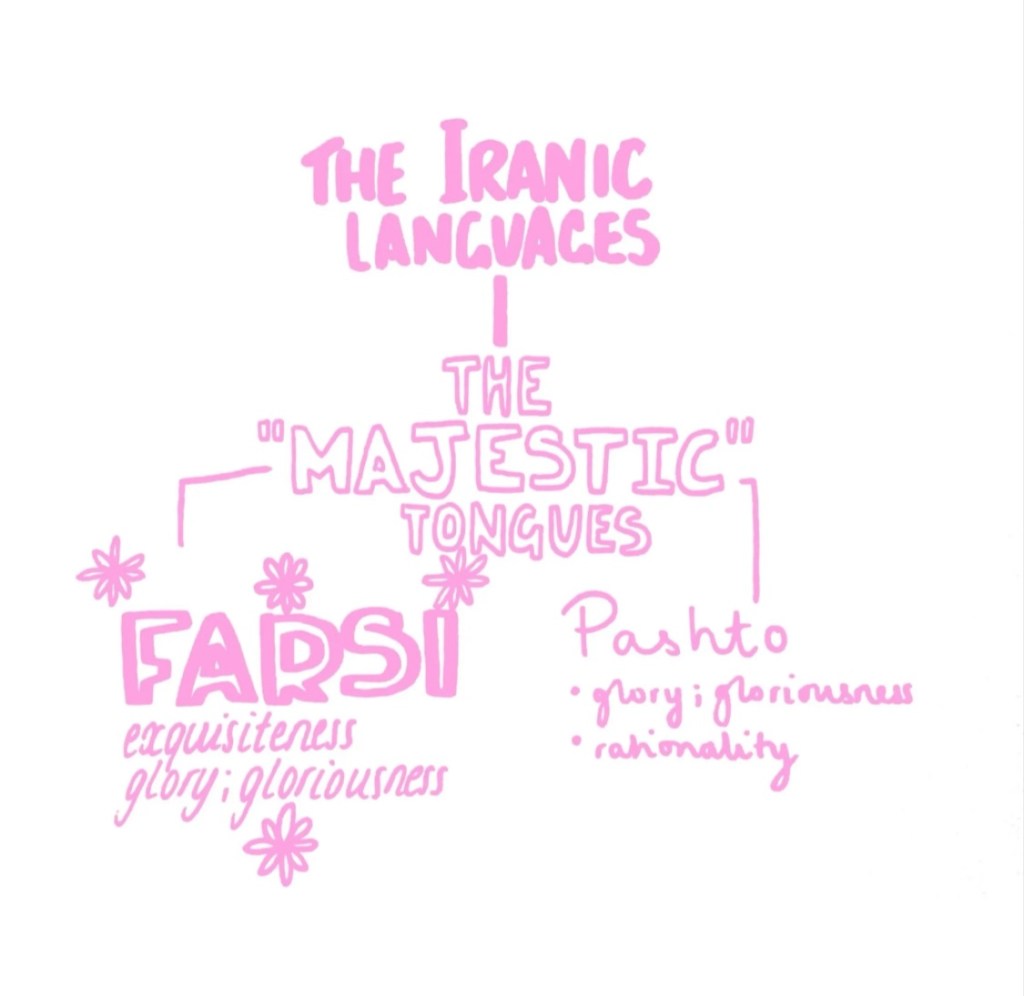
Farsi/Persian has the Buzz-Concepts 1) exquisiteness and 2) glory, gloriousness. The primary Buzz-Concept of Farsi was originally glory, gloriousness as in other Iranic languages but this was displaced as Iran became Islamised. Likewise, Arabic once had the primary Buzz-Concept of unity, and Turkish, tact, but these also became displaced by an overarching Islamic Buzz-Concept exquisiteness (as Buzz-Concept) — in Arabic: رَوْعة / روعه / rawa, rawea, ruea, roua, roa, rawʕa, raw’a, raw3a / “exquisiteness” “splendour” “instance of amazement; instance of fright” “fear” “panic” “horror” “outrageousness” “beauty” “glamour” “excellence” “goodness” “stylishness” “agreeableness” “grace” “pleasantness” “prettiness” “alarm” “angst” “awe” “charm” “fright” “dread” “fineness” “glamour” “gorgeousness” “surprise” “terror” “trepidation” “fascination” “grandeur” Exquisiteness; Extraordinariness; Extravaganzas; fabulosity; Fabulousness; Heavenliness; Pageantries! Or something related to this word.
The position of Iran as Indo-European-speaking in the 21st century (another Islamic great, Turkey, has Anatolian IE heritage, though this branch is now entirely extinct) is interesting in that it is also a great Islamic power, where Christianity predominates in Europe and polytheistic Hinduism reigns in India.
Eight centuries ago, Iran birthed the deep wisdom of Rumi’s poetry, which pioneered with its deep sense of love and carved out a pivotal grasp of self-awareness for the entire world, in retrospect. Iran’s famous 13th-century poet was also an Islamic Hanafi jurist, theologian, and Sufi mystic. It seems strange to see Rumi’s homeland default nowadays so dramatically on such critical matters as American and Western relations. Iranian Islamists don’t understand that the Western and American grasp of glory is very legitimate -though sometimes mishandled- and they betray the legacy of Rumi, while still holding him as a central figure, by wanting selfish glory, without the deeper validity of intellectual consent.
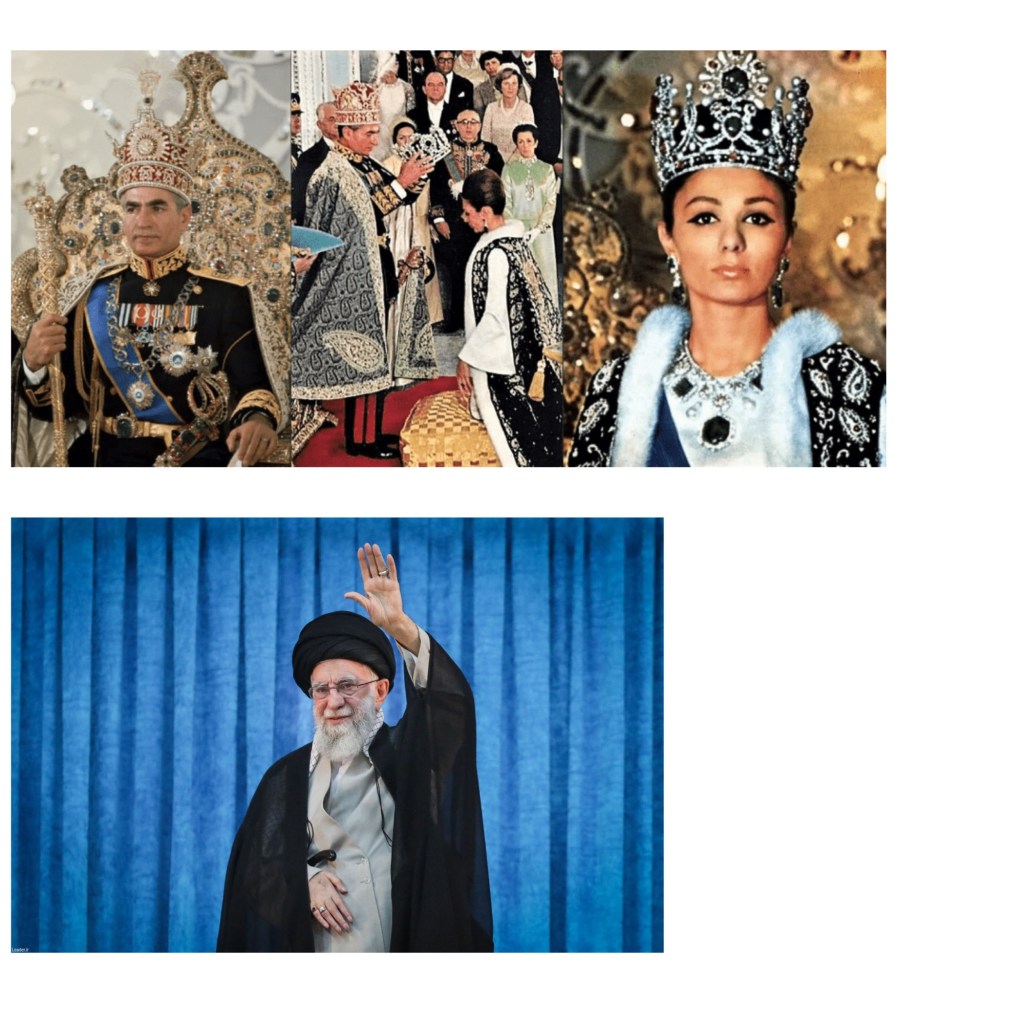
Yes, Iran has garnered intense notoriety for its opposition of the United States of America and the West since its 1978-79 revolution and the abolition of the Pahlavi monarchy. “For the Iranian revolutionaries, the US was, and still is, the Great Satan.” – Jim Muir, BBC News, 2015. Many Iranians have a different vision for the world, Americanised and Westernised as it seems to have evolved. Some even think that people’s obsession with the West is unjustified, and more attention should be directed towards Persia and Islam instead.
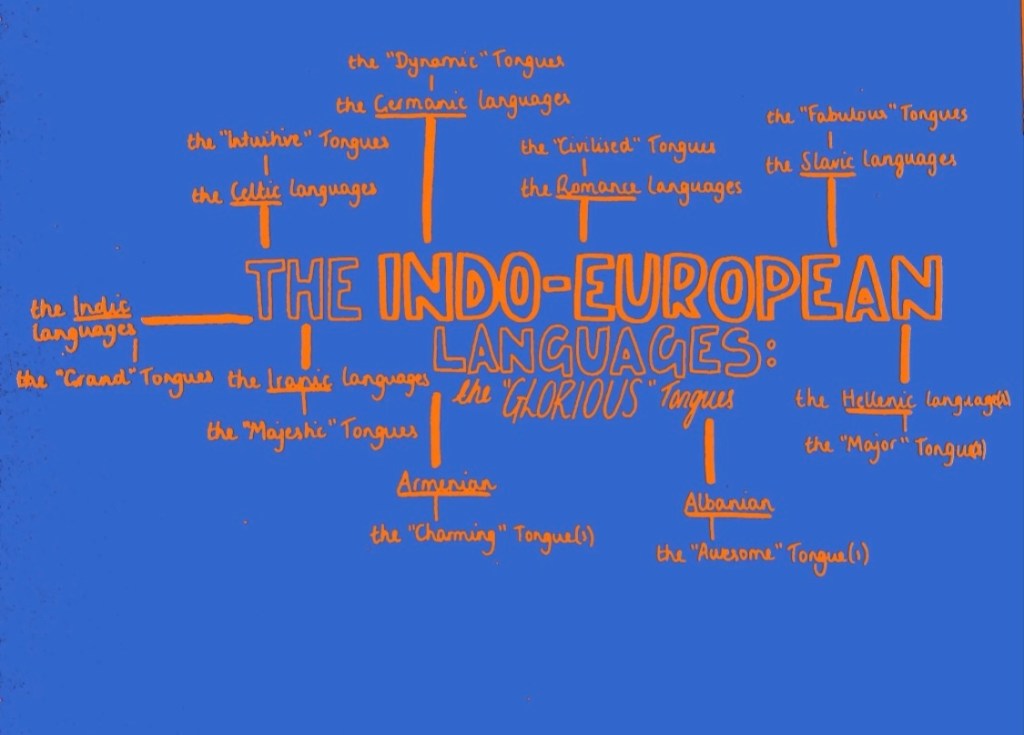
I have suggested viewing the Indo-European languages as the “Glorious” Tongues, as all Indo-European peoples seem to have this obsessive appetite in common. Although spoken in primitive times, Proto-Indo-European probably buzzed originally about (primitive) progression and upgraded to (primitive) glorification as traction accumulated. Indeed, since prehistoric Neolithic Proto-Indo-European times in the Caucasus and the Pontic-Caspian Steppe, different Indo-European-speaking peoples have developed their own understandings and visions of glorification.
Ultimately, the Iranian version of Indo-European-ity was seized, detained, captured by Islamist revolutionaries. The hold it hostage, aligning themselves instead as Shia Muslim first, and plunder it for skewed ends. Persian Islamists think they are purging themselves of indignity, but they are so very wrong to interpret Indo-European-ity in this way. Why? Because it distorts the patrimony for the rest of us, which proffering this disturbing façade of hypocrisy, especially in Europe, where Indo-European DNA is actually more prominent.
Maybe some people don’t see the prominence of the bond between Farsi and English without the technical linguistic knowledge of inherited word forms. The Iranian monarchy, which was nevertheless far from perfect, was honestly so much better at managing Indo-European-ity, and that was accordingly something the United States was eager to recognise.
The Proto-Indo-Europeans were not necessarily so boldly all about primitive glorification, but of course they were proud of their language and its structures and knew it had phenomenal potential beyond them. What were they about then? They certainly had a vision, and it was interesting. To elucidate, my theory is that the Proto-Indo-Europeans called themselves something related to the “Veneti”, “Venetians”, “Venetes”, *vanat-, *wenet(o)-… Most likely from an Indo-European root with the sense of “love”, “wish”, “strive”, “desire” (the name of the Roman goddess “Venus” is a cognate), “kinship”, also “wind” (cognate alert!), and/or another root meaning “plait”, “braided ones”, “wrap, enclose, cover”. See more here. Their cultural vision reflected their name, which even had structural connotations. The Indo-European-speaking Yamnaya came to bury people in their famous kurgans, reflecting brains being inside heads and/or braids on heads, perhaps. The Indo-European dynamic could be a magnificent sun-dome model, and what one does within the sun-dome, and/or flexing between this and intimate braiding. These structural connotations live on, for example in Iranian politics. And are of course woefully misinterpreted by Iranian Islamists.
;
 The Buzz-Concept Project