
Here are some more general findings about how Buzz-Concepts work.
I have identified the quantity of four as principal at this current time in human history; the different stages from one to four have been incorporated at different times/points of development in human history.
Originally, after humans first started speaking there was no Buzz-Concept – strictly speaking. Then we became extra interested in survival, and instituted the first Buzz-Concept of survival. We understood that we were transcendent in our wit but we weren’t the biggest, fastest, or even longest-living (probably) specimens in the world -presumably this was back in Homo sapiens’ homeland of Africa- and the Buzz-Concept survival was moulded to facilitate people’s senses of perspective, as well as reasoning skills, survival instincts, community spirit, visionary attitudes, finesse/refinement/sophistication, childbearing security, competitive appetite, historiographical acuity and more.
Eventually, people became interested in the concept of sensuality, and the secondary Buzz-Concept was introduced. Therefore, perhaps, early human language after this point had the Buzz-Concepts:
- 1. Survival
- 2. Sexiness ?!
Level 3 was not introduced until after Homo sapiens migrated to Asia, as the ancestors of all humans except most typical black Africans, including the Bantu ethnicity, also the Khoisan who are believed to be the oldest surviving ethnicity. I have theorised that it was Proto-Mongoloids who developed level 3. This entails formalised concretisation of nationality or tribal/ethnic identity (before nationalities existed). Long before the academic discipline of philosophy existed, tens of thousands of years ago, we had this: concept number 3 = the philosophy of [Mongoloids/Anglophonism/Françaisité/Europaität/Hispanidad/Russkost‘ etc.]. The “buzzy structure” of the resulting “NewMongoloid” language…?
- 1. Sense?
- 2. Collection?
- 3. The philosophy of NewMongoloidism?
Finally, we have number 4, which is about cultural enhancement. It was probably instituted by primitive Caucasians between Eastern Europe and West Asia. An interesting fact is that Greeks like to think pretend/think that they did it, but they didn’t. Many parts of the world have been challenged by the diffusion of “number 4”, and “number 3” come to think of it.
- ENGLISH: 1) success 2) passion (in America this changes to infinity after the Native Americans) 3) the philosophy of Anglophonism 4) sophistication/flexibility/depth
- FRENCH/FRANÇAIS: 1) passion 2) sophistication 3) the philosophy of Frenchness/“Francosité” (made up term) 4) dextérité
- GERMAN/DEUTSCH: 1) Erfolg 2) Fähigkeit 3) the philosophy of Europeanness 4) Sinnlichkeit
- SPANISH/ESPAÑOL: 1) pasión 2) primor 3) the philosophy of Hispanism 4) provecho
- RUSSIAN/RUSSKIY: 1) sovershenstvo/perfection 2) chuvstvennost‘/sensuality 3) the philosophy of Russkost’ 4) utesheniye/comfort
Sometimes, Buzz-Concepts can be cohered as layers – though the buzz dulls by number 3 and I only really term 1 + 2 as the Buzz-Concepts. 3 + 4 are more subtly ingrained. Another way to visualise Buzz-Concepts comes to us the form of the ancient swastika symbol – which the Nazis cunningly appropriated for their own evil ends.
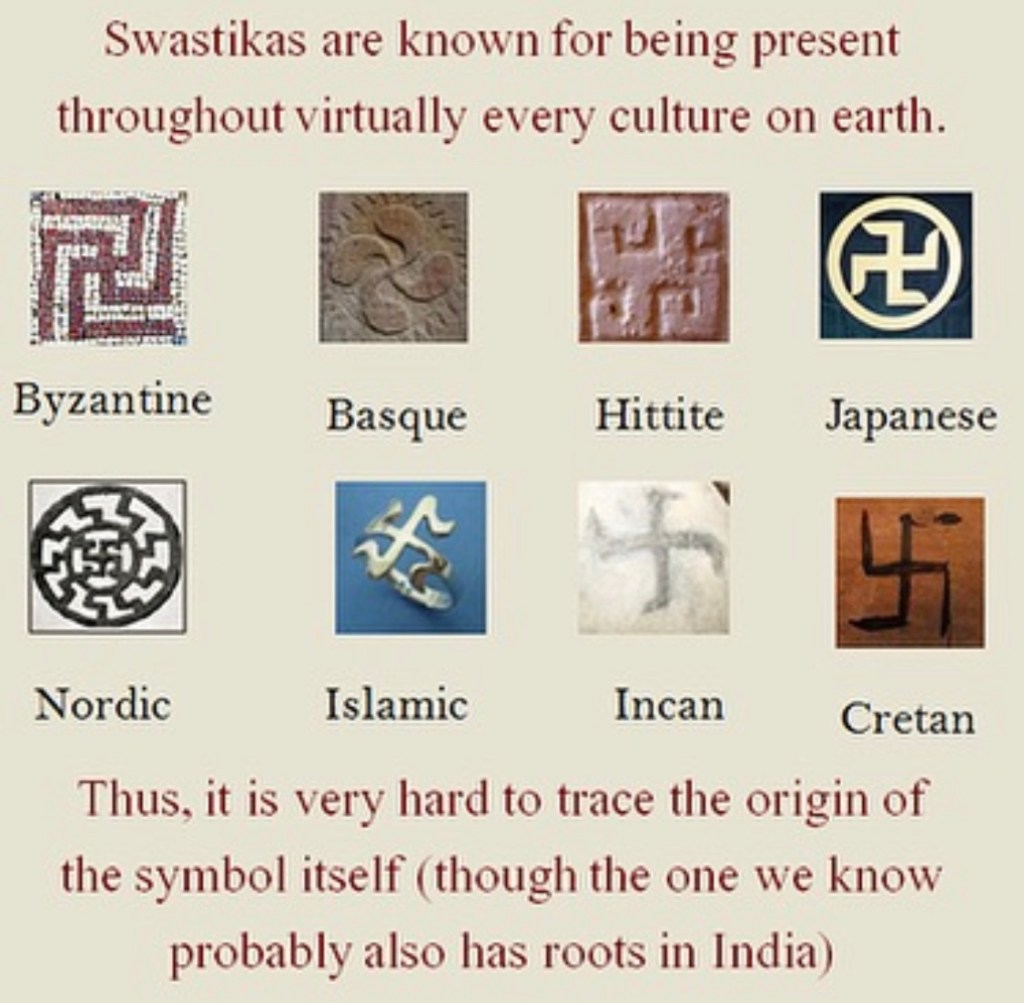
Alternatively, I suggest a spherical model with more flexible and transitory subsections that interplay and overlap in varying ways, and which accommodates a more holistic view of the whole language sphere.
The concept of interrelativity is key for understanding Buzz-Concepts. Buzz-Concepts are strongly guided by interrelativity between human groups, and vice versa.

 The Buzz-Concept Project